The consumer doesn't belong to one tribe anymore
Before we talk about brand strategy, we need to talk about what happened to culture.
The beauty consumer, the wellness consumer, the supplements consumer. None of them exist as a single archetype anymore. They're a fragmented playlist of identities. A perimenopause performance woman who doomscrolls anxiety TikTok. A "clean" supplement fan who loves trash TV. A biohacker with a Headspace streak and a chaos-scroll habit.
We moved from monoculture (shared TV shows, magazines, a single "wellness look") to a world of splintered micro-communities, each with their own language, rituals, and aesthetics. The "beauty consumer" doesn't exist. The "supplements consumer" doesn't exist. You're designing for specific scenes, not for the category.
Culture is made bottom-up now, in group chats, Substack newsletters, underground drops, local gyms, Discord servers. Algorithms don't create one big mainstream. They stitch together constellations of overlapping identities. People jump between scenes (pilates TikTok to GLP-1 memes to long-form longevity podcasts) and assemble their sense of self from the fragments.
Dazed Beauty Report: 64% of Gen Z say beauty helps them feel part of a community. But the communities themselves are multiplying and overlapping.
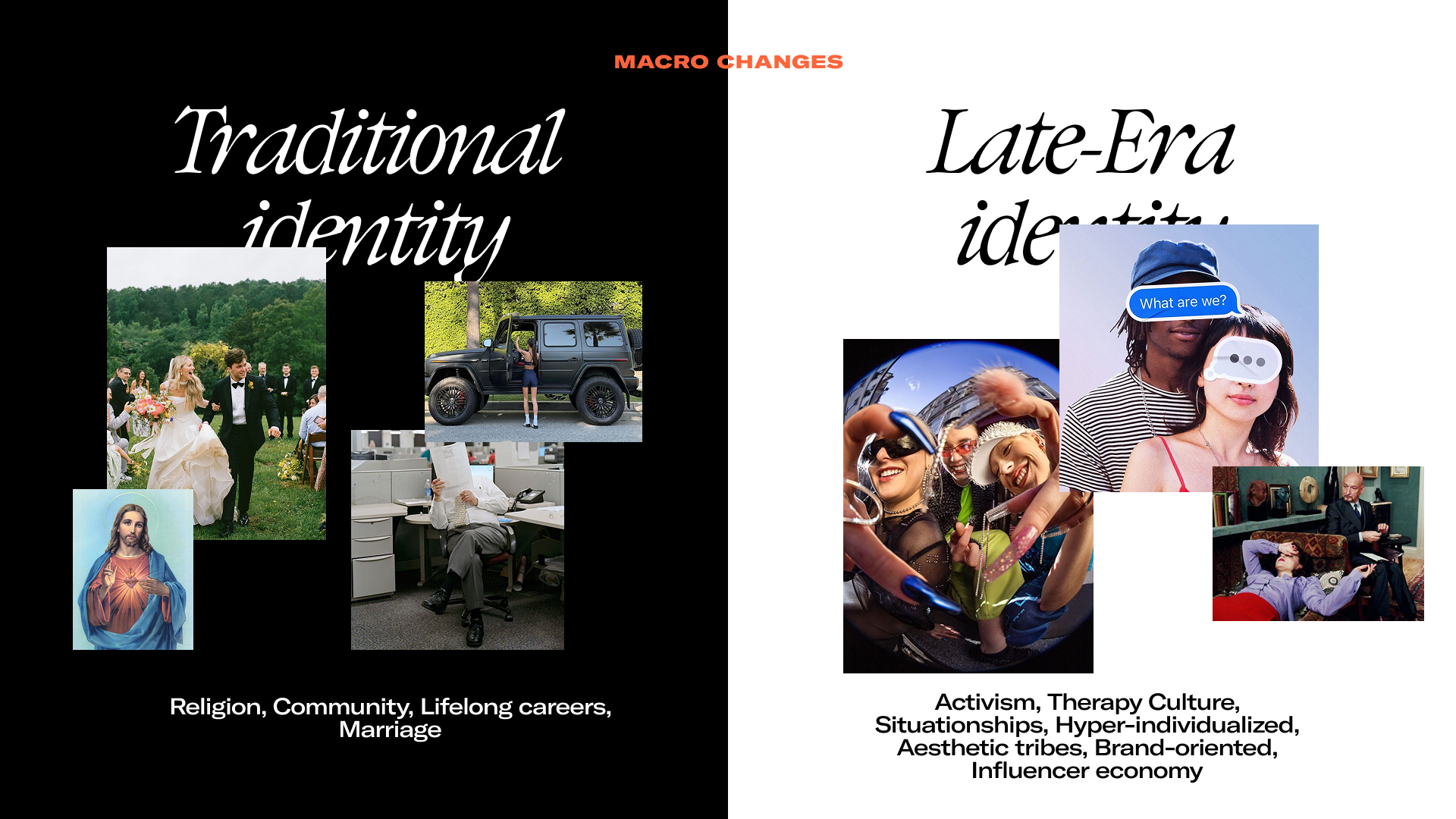
The old identity model was stable: religion, community, lifelong careers, marriage.
The late-era identity model is fluid: activism, therapy culture, situationships, hyper-individualization, aesthetic tribes, brand-orientation, influencer economy. Beauty and wellness sit at the center of this shift because they're how identity becomes visible. When identity fragments, the brands that win are the ones that give fragments a place to gather.
Aesthetics are currency. belonging is the asset.
Jill Grace (cultural strategist) put it cleanly: aesthetics have become currency. We buy a vibe we can live inside.
She's right about the currency part. But currency circulates. It moves. It loses value. What doesn't lose value is the community that forms around the vibe. The aesthetic gets you in the door. The belonging keeps you spending.
Every micro-identity now comes with a full ecosystem: a uniform, a shopping list of specific brands, a set of acceptable references, a vibe vocabulary, and an unspoken rulebook for what counts as "real." Quiet luxury fashionistas. Cold plungers. Pilates girlies. Skincare addicts. Finance bros. Marathon culture. Coquettes. Soft goths. Each tribe has its own beauty and wellness stack.
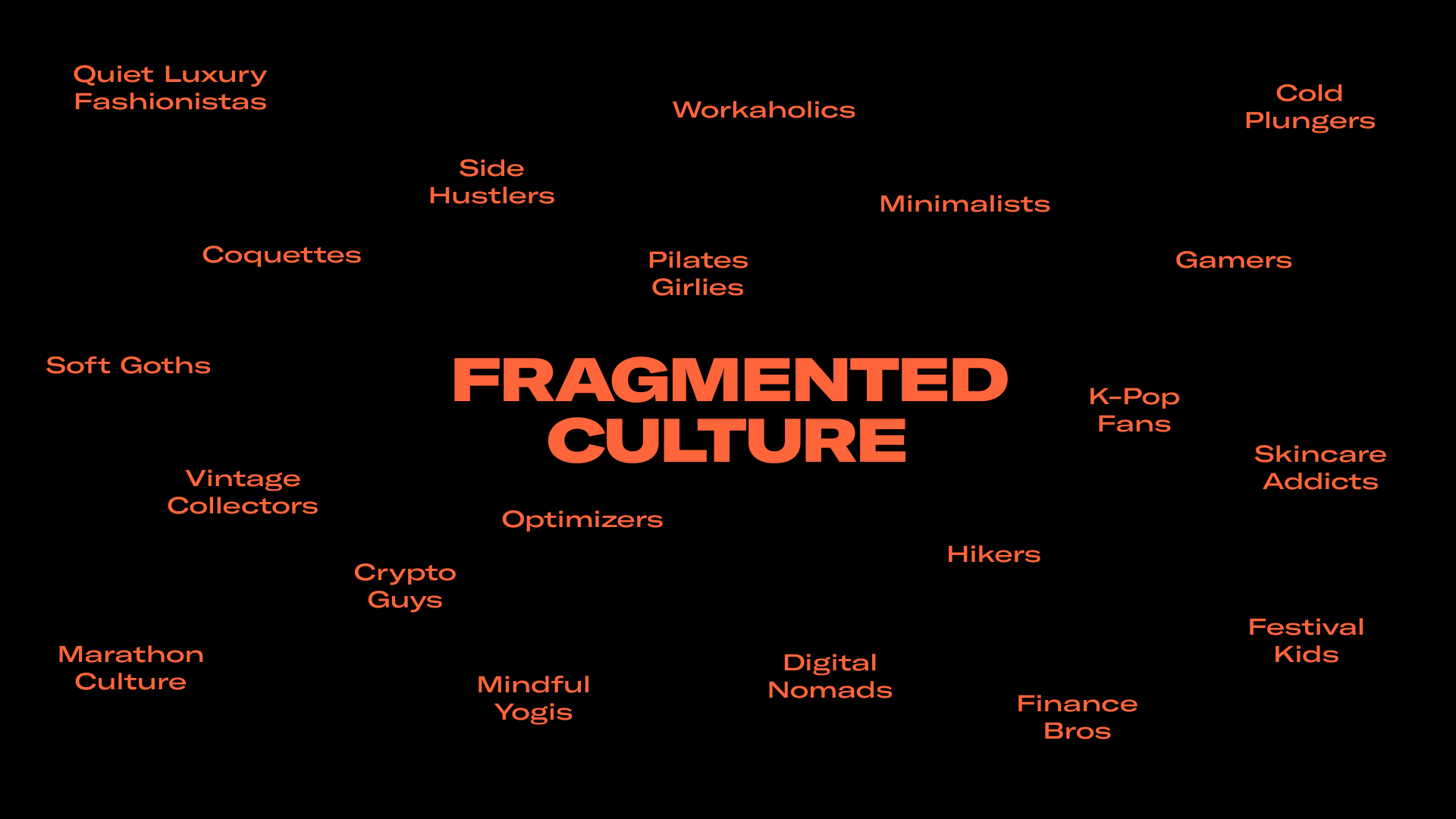
New identities are micro-signals of belonging. The brand that shows up in the tribe's shopping list isn't there because of a media buy. It's there because the community adopted it as a membership marker. Rhode's phone case isn't a phone case. It's a visible community signal. One gloss equals minimalist makeup equals belonging to a specific cultural cohort. You see the case, you know the tribe.
This works identically in wellness and supplements. The longevity-obsessed biohacker tribe has its stack (AG1, Bryan Johnson protocols, continuous glucose monitors). The hormone-balancing community has its own (Milamend). The "eat your skincare" scene has turned carrot salad into "nature's retinol" with 1M+ likes.
Common mistake is treating community as a marketing channel instead of a product feature. Community isn't your Instagram comment section. It's not your referral program. It's the reason your consumer picks you over a cheaper alternative with the same ingredients. If your community would evaporate the moment you stopped posting, you don't have community. You have an audience. Those are different things.
The data on why belonging beats performance
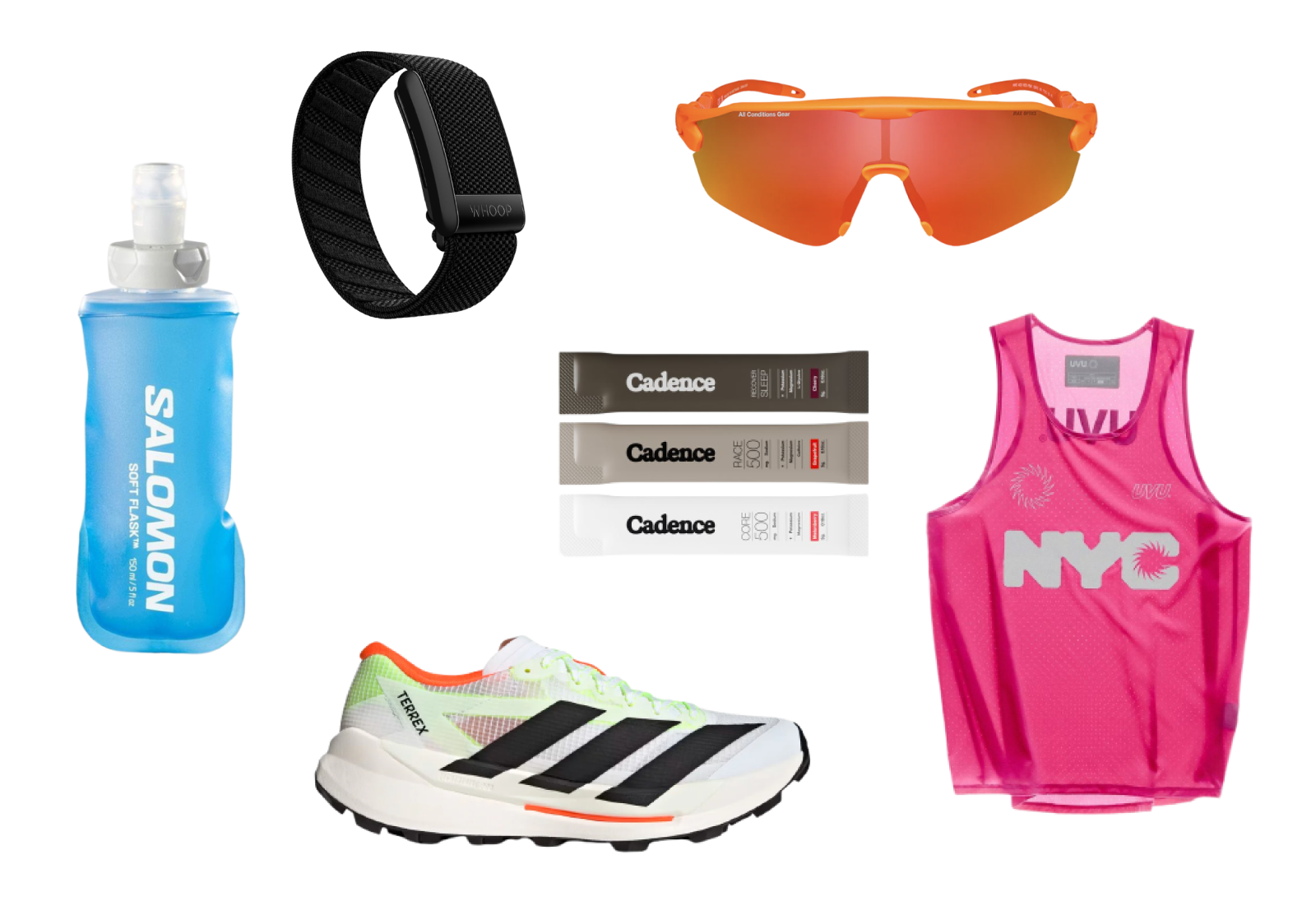
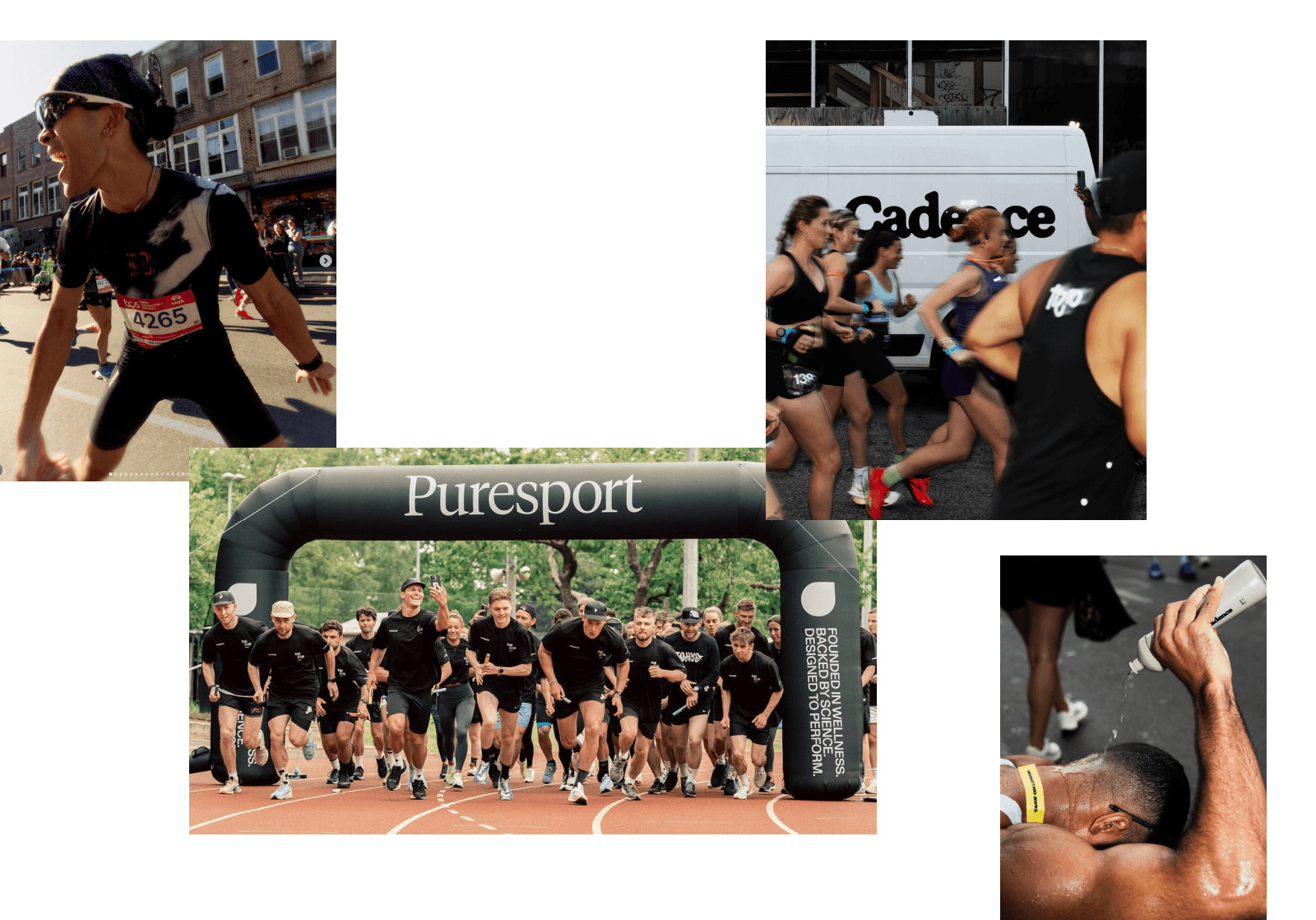
Bandit Running has a 4.92% engagement rate on Instagram with 147,000 followers. Nike Running has 6 million followers and a 0.32% engagement rate. At the 2024 New York City marathon, Bandit's apparel was as prevalent as Nike's and older fashion-forward labels like Tracksmith. The gap isn't a social media trick. It's a community architecture difference.
Bandit doesn't sell running gear to runners. Bandit sells membership in a specific running scene. And they built it through a principle their CEO Nick West calls "service-first, gain-second."

The brand co-creates products with its community through Instagram Close Friends surveys on colorways and in-person feedback sessions at its offices. At the 2025 Boston Marathon, Bandit set up a pop-up not to sell product but to make sure runners had Band-aids, gel packs, medal portraits, shakeout runs, and a happy hour. West said marathons are emotional events, and when Bandit elevates that experience, the lifetime value and loyalty of those customers is much higher than average.
Strategic pattern: Activity-driven communities are the most defensible brand tribes in wellness and fashion right now. They can't be replicated by a competitor because the community itself is the product. You can copy Bandit's designs. You can't copy the 6am Brooklyn run where everyone is wearing Bandit and nobody planned it.
This is transferable to beauty and supplements. The ingestible beauty market is growing from $4.2 billion (2024) to a projected $13.1 billion (2034). Functional beverages are heading toward $250 billion by 2030. The brands that will capture disproportionate share in these booming categories won't be the ones with the best formulas. They'll be the ones whose consumers feel like members, not buyers.
"Eat-your-skincare", morning shed, skin gym: ritual is the belonging mechanism
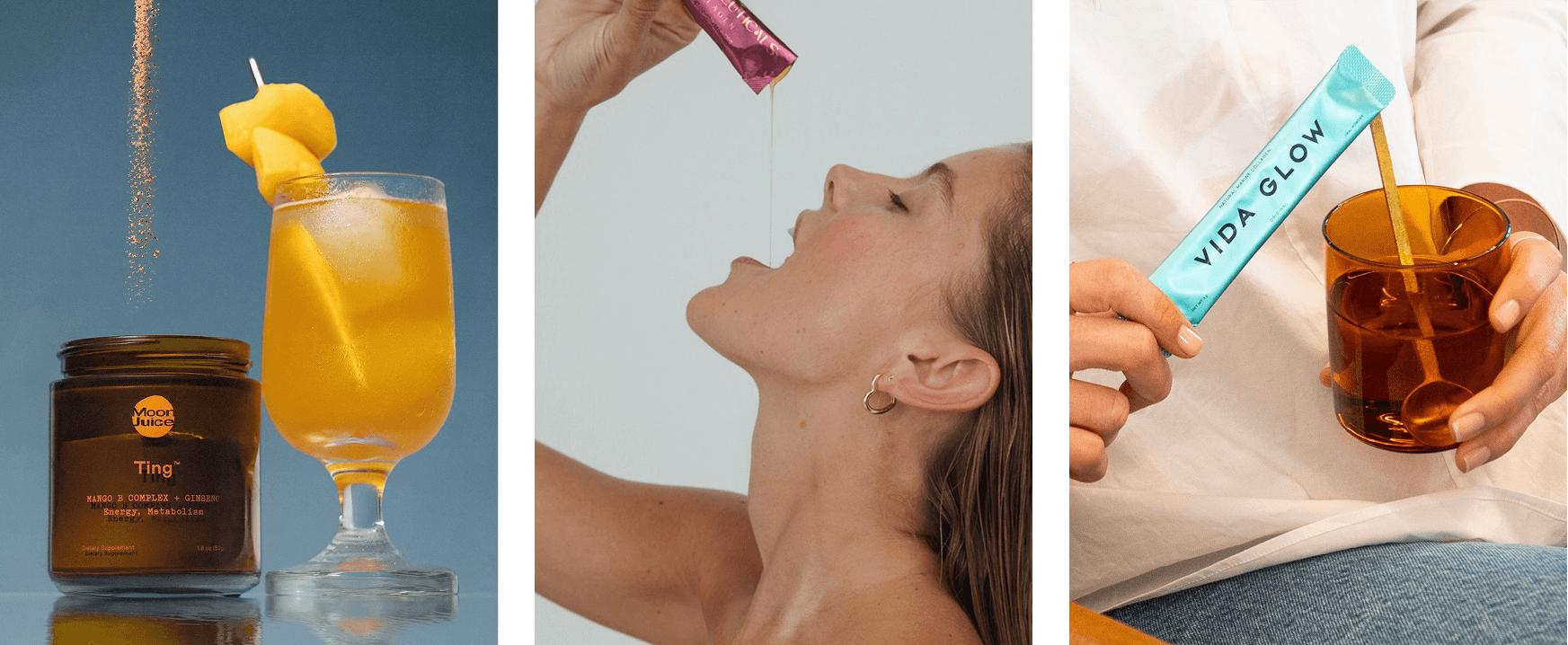
The ingestible beauty space and the tool-driven ritual space look like different categories. Strategically, they're the same belonging play.
The "eat your skincare" trend went viral with carrot salad videos as "nature's retinol" pulling 1M+ likes. Milamend sits at the crossroads of functional beverages and ingestible beauty (growing twice as fast as traditional skincare). The Morning Shed trend exploded on TikTok with over 30 million hashtag views by early 2025. Skin Gym is generating around $37M in yearly revenue, turning skincare into "skin fitness."
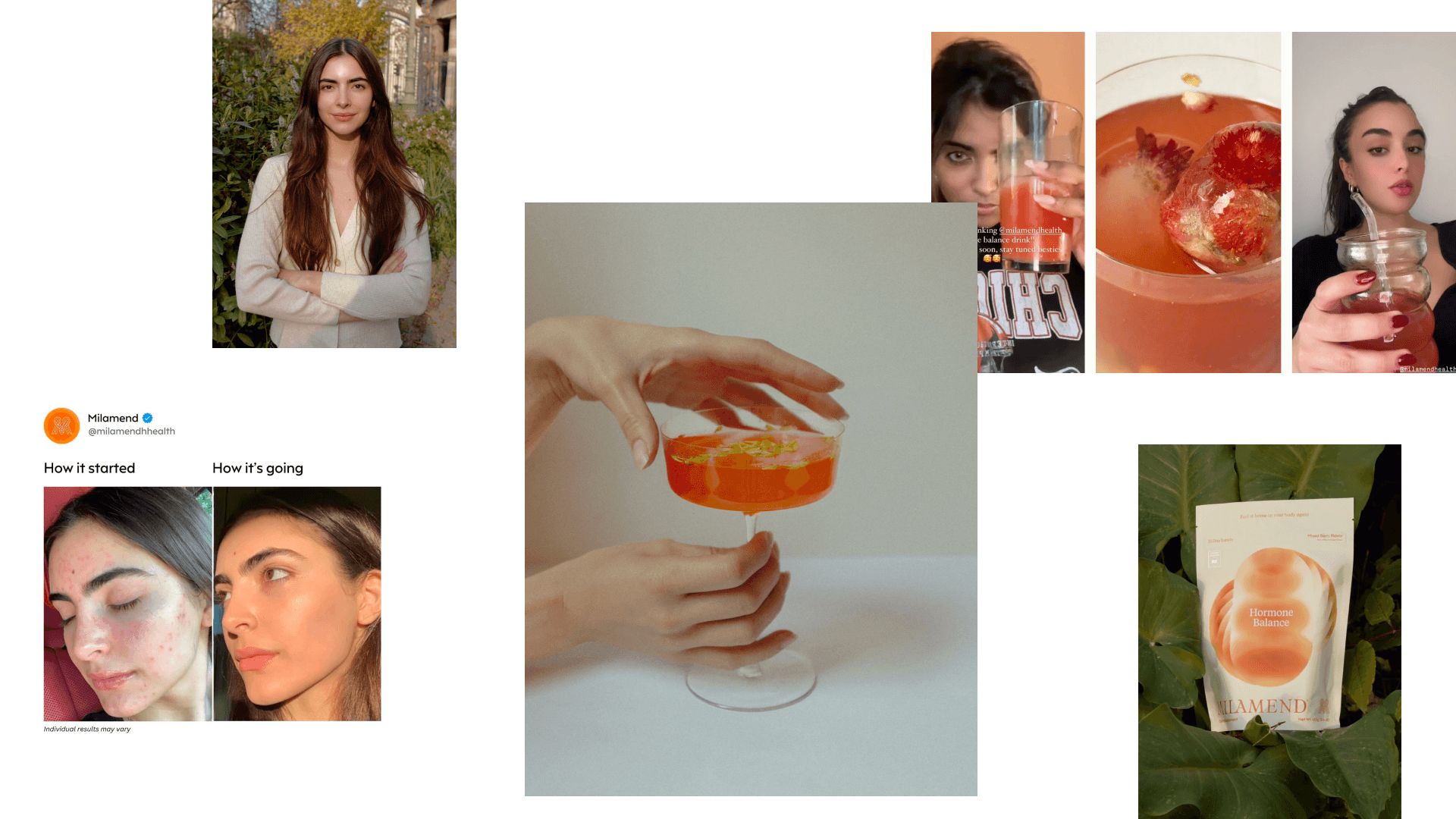
This is where wellness and supplements brands have a structural advantage over traditional beauty. A serum is a product. A morning stack (supplements + smoothie + face tools + journaling) is a lifestyle. Lifestyles build tribes.
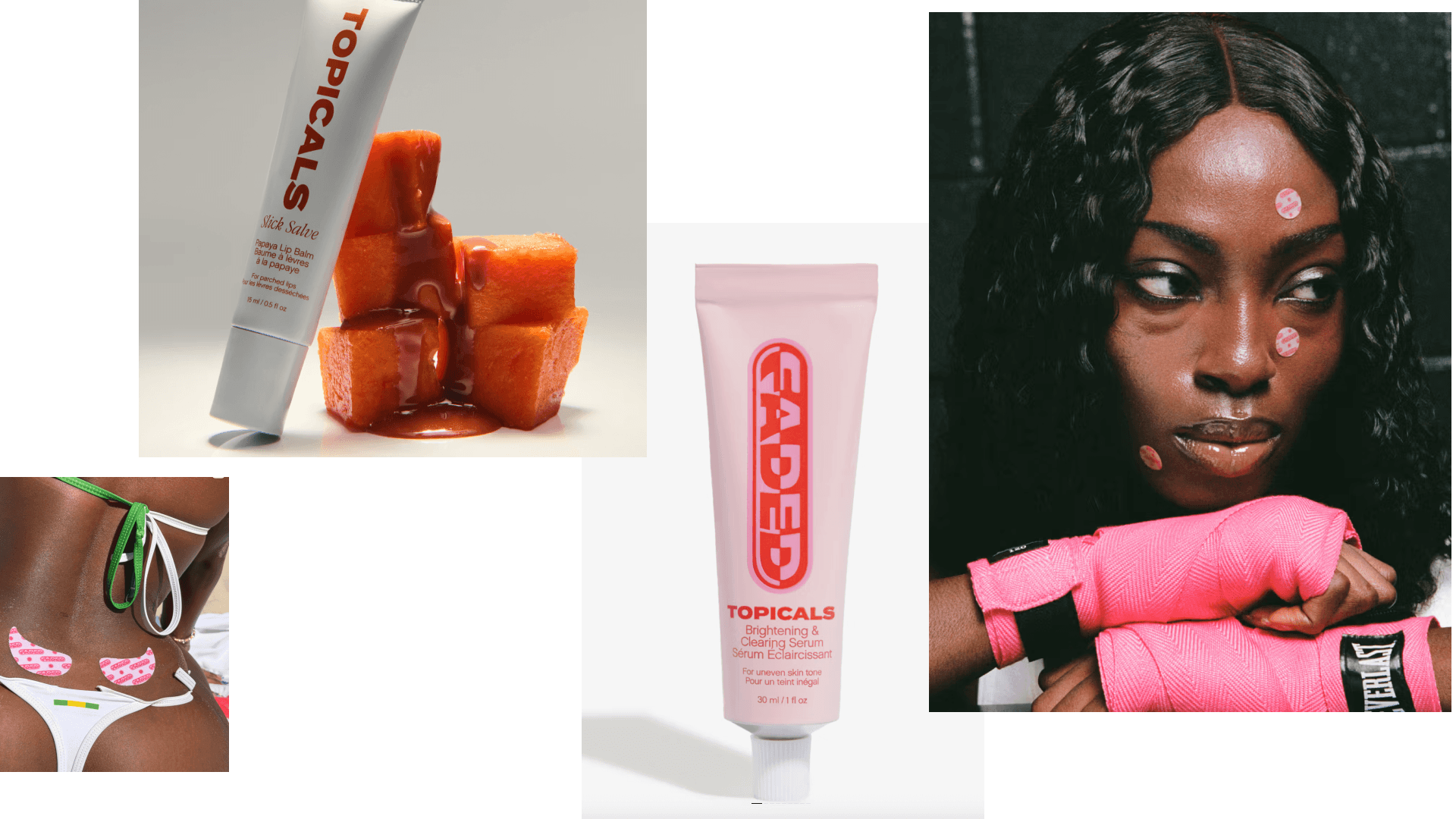
Abiola Babarinde, Topicals: “A community is like a back-and-forth conversation with people to understand what their motivations are, their goals are, how they like to exist in the world.”
Topicals joined community platform TYB in 2022. Since then: 372,000 responses to community challenges, 53 percent higher purchase frequency and 24 percent higher lifetime value among TYB members versus non-members. The most loyal customers can apply to become "Topicals Insiders" with priority access to paid UGC like PR unboxings and get-ready-with-me videos. That's not a loyalty program. That's a community where your best customers become your creative workforce. (Source: BoF report).
It's a structural response to what happened to culture itself.
Orchidea strategic advice: If you're launching a supplements or ingestible beauty brand, don't start with the formula. Start with the ritual. What does the daily practice look like? Is it documentable? Is it shareable? Does it create a visible marker of belonging? Milamend's founders understood this: the before/after skin photos are community content, not just testimonials. Every customer who posts their transformation becomes a tribal recruiter.
Community is the last thing AI won't replicate
AI can generate your concept, write your product descriptions, build your social content calendar, and even formulate your products based on trend data. The execution layer of beauty and wellness is being commoditized in real time.
What AI cannot do is make people feel like they belong somewhere.
It can't create the feeling of showing up at a run and seeing 40 people in the same brand. It can't manufacture the inside jokes in a Discord about a shared supplement routine. It can't replicate the quiet recognition when someone spots your phone case in a cafe.
The brands winning disproportionate share in beauty, wellness, and fashion all share one trait: they've made belonging the core product, not an afterthought. It's their competitive edge. And it's the one advantage that gets deeper.
March 18, 2026
.png)