Somewhere along the way, make-up started raiding skincare’s bathroom. Foundation got thinner, glossier and acquired a dropper. Sunscreen picked up pigment. Lipstick became a treatment. Even blush (once perfectly happy just making us look slightly more alive) now comes with hydration, antioxidants and the promise that it is doing something useful while sitting on our cheeks.
The industry calls it skinification. We prefer serumisation because the interesting change is how completely make-up has learned to behave like serums. Make-up absorbed the whole serum playbook: fluid textures, active-led formulas, skin-first claims, pipettes, and the expectation that a product should improve something while you wear it. Looking good for eight hours was no longer quite enough. The product had to justify what it was doing on your face for those eight hours too.
And despite how perfectly all of this seems designed for a TikTok close-up, the story started much earlier.
The first “serumised” make-up wasn’t a serum
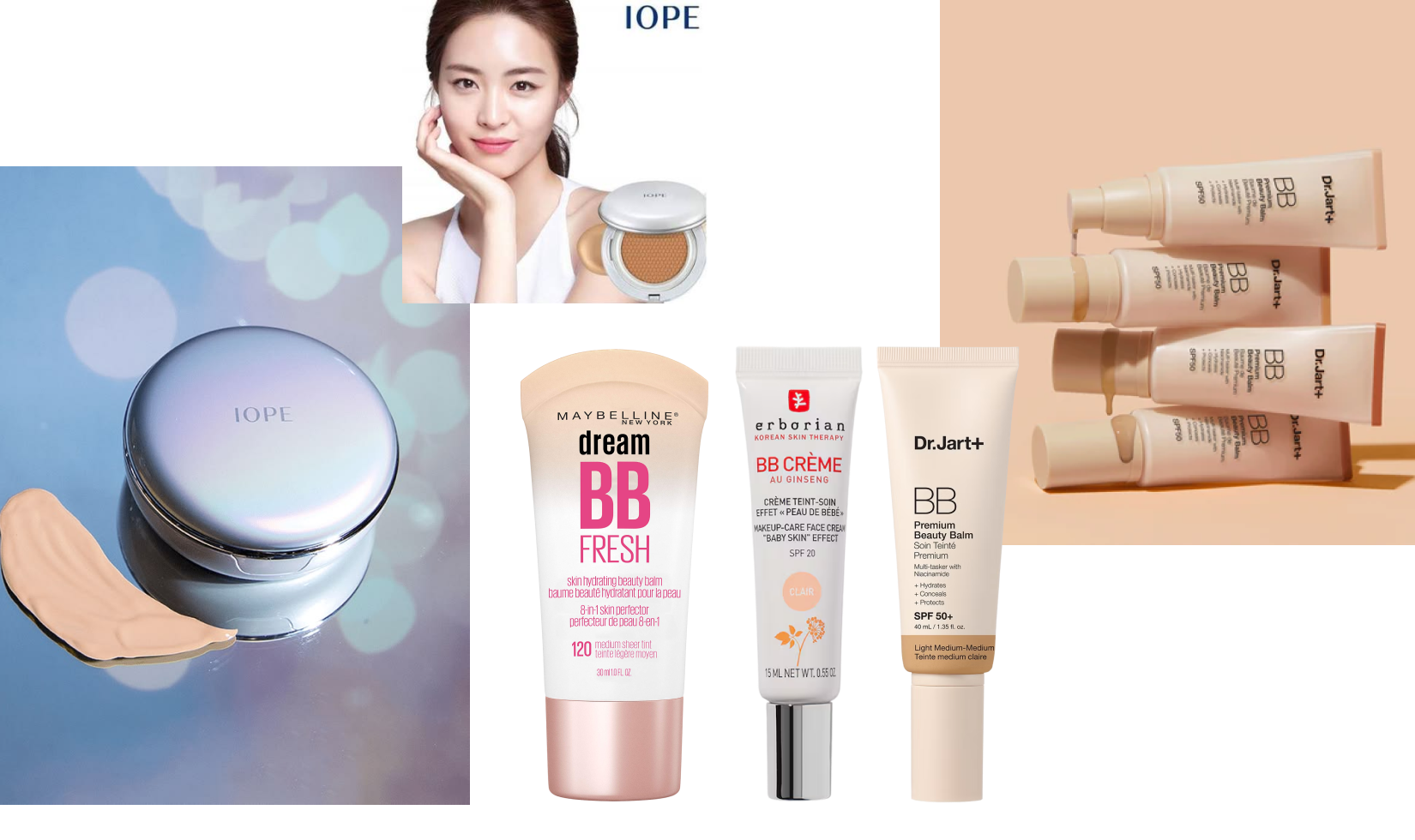
One of the earliest clues to where make-up was heading didn’t come in a pipette at all. It came in a compact.
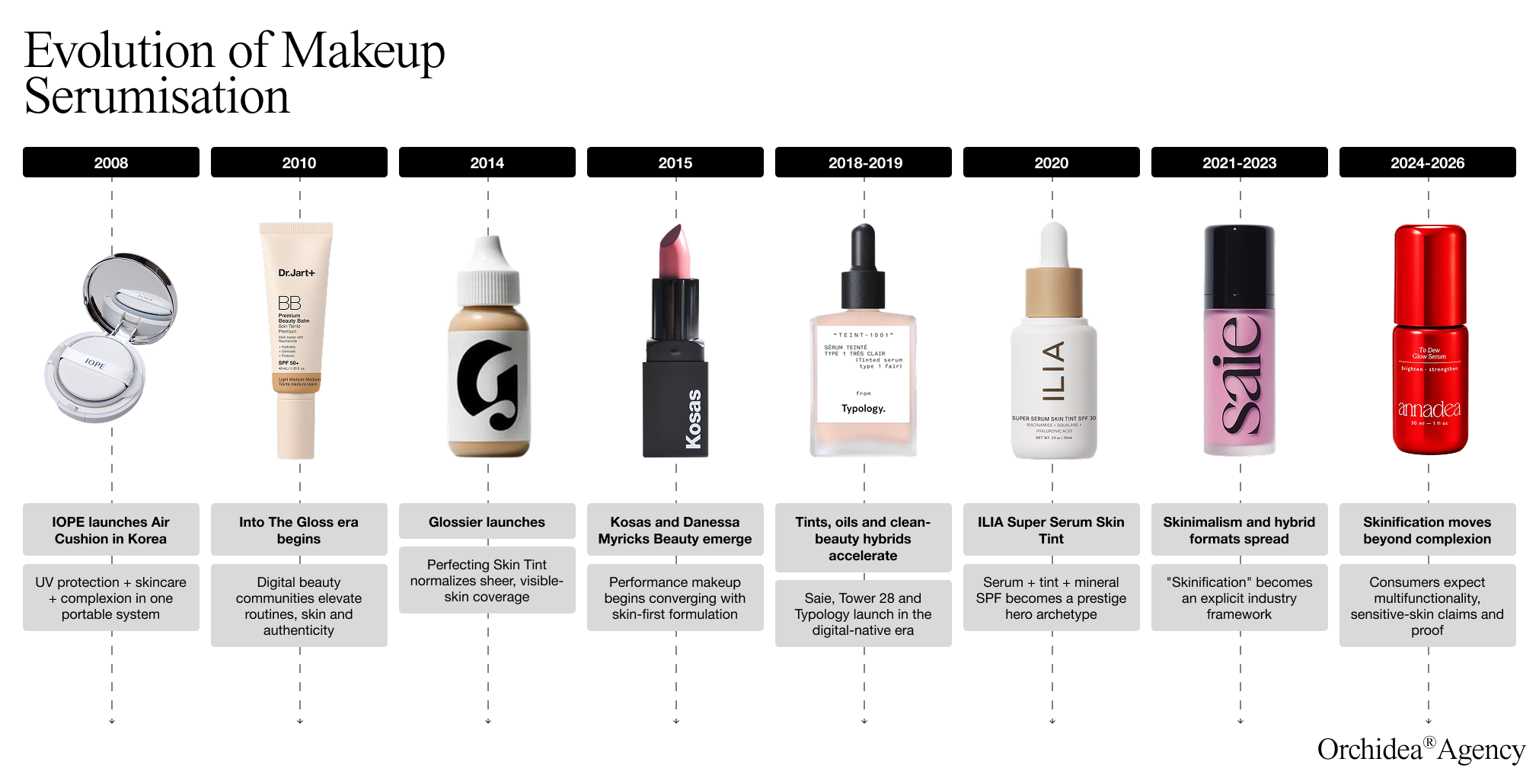
In 2008, Amorepacific launched the IOPE Air Cushion after noticing a fairly mundane problem: sunscreen is useful, but reapplying it over make-up is annoying. The cushion turned protection, complexion and touch-up into a single gesture, and consumers clearly understood the assignment. Sales grew from KRW 3.8 billion in its launch year to more than KRW 200 billion by 2014. One product now did several jobs that used to belong to separate steps. And once beauty consumers remove a step from the bathroom, convincing them to put it back is not particularly easy.
Orchidea strategic advice: This is still a useful way to think about product innovation. Start with the irritating moment, not the fashionable ingredient. What are people skipping, mixing, carrying around, forgetting to reapply or quietly wishing took less effort? Solve that first. “We really wanted to launch something with niacinamide” is not yet a consumer problem.
Around the same time, the West caught BB cream fever. I remember when all my girlfriends were obsessed with BB creams and their magical actions. One tube promised to moisturise, cover, protect, brighten and somehow fix your skin while you weren’t looking. Garnier called its version Miracle Skin Perfector, which tells you everything about the mood. The formula had started decades earlier as a German dermatologist’s balm for skin recovering from treatments. Korea then turned it into everyday make-up, and in the early 2010s brands like Dr.Jart+ carried it to Western shelves. Nobody could quite explain what a BB cream actually did, and nobody cared. It taught a generation to expect make-up to do something for their skin.
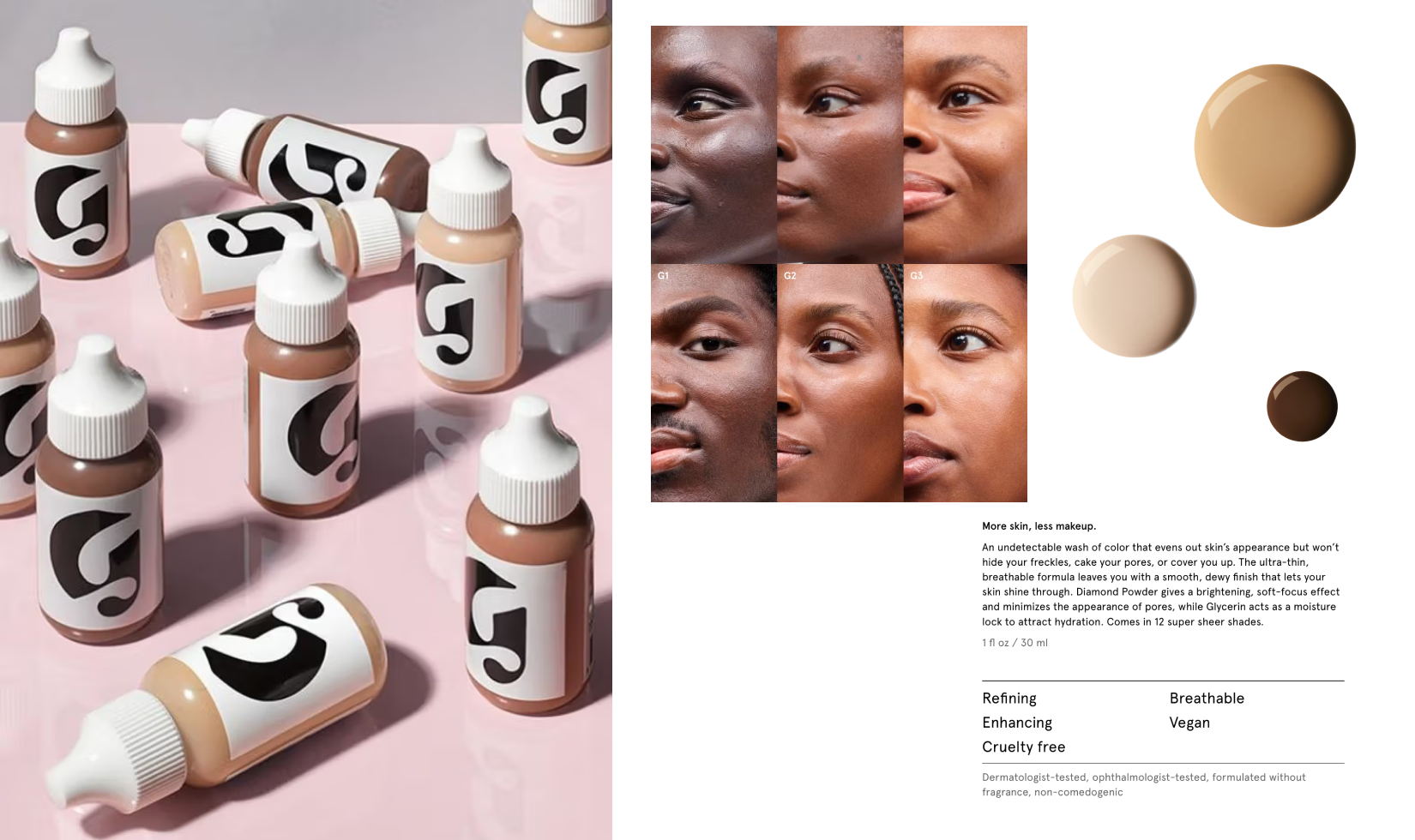
In 2014, Into The Gloss, the blog that had spent four years photographing real people’s bathroom shelves, became Glossier. It launched with a line that reset the category: “Skin First. Makeup Second.” Perfecting Skin Tint was deliberately sheer, designed to let freckles and real skin show through. The goal of make-up moved from perfect coverage to skin that looks unusually healthy, and suddenly a foundation could be criticised for looking too much like foundation. A year later, Kosas and Danessa Myricks Beauty started pulling performance make-up in the same direction.
While products were becoming more multifunctional, consumers were becoming much more literate about what was inside them. By 2023, 67% of US make-up users aged 18–34 told Mintel they were paying more attention to make-up ingredients than a year earlier. That raised an uncomfortable question for traditional make-up: if consumers know exactly what their serum is doing for their skin, why should foundation get to sit there for ten hours and do nothing?
ILIA: make-up came back dressed as skincare
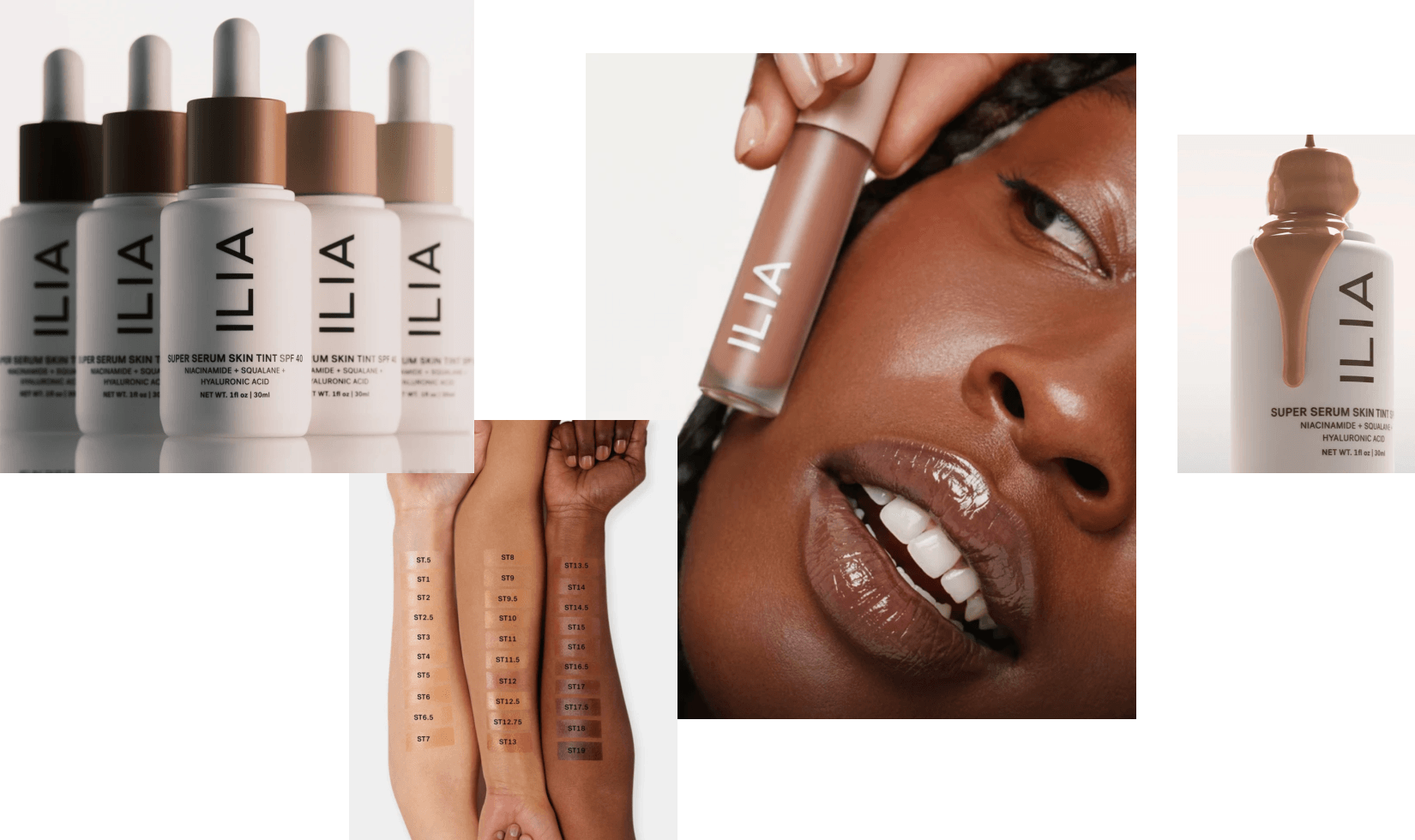
By 2020, beauty consumers had learned to speak fluent skincare. ILIA gave that new literacy a product.
Super Serum Skin Tint put colour, skincare and mineral SPF into one fluid formula, but the clever part was how immediately it looked like skincare. The dropper, the watery texture, the word serum itself — foundation had basically changed clothes. Today ILIA goes further and publishes 28-day testing around visible changes in pores, blemishes, redness, uneven tone and lines. The promise has evolved from this contains skincare ingredients to your skin may actually look different after wearing it.
There is something objectively funny about how much intellectual credibility beauty managed to extract from a pipette. Put pigment in a dropper bottle and suddenly it looks like it completed postgraduate studies in dermatology.
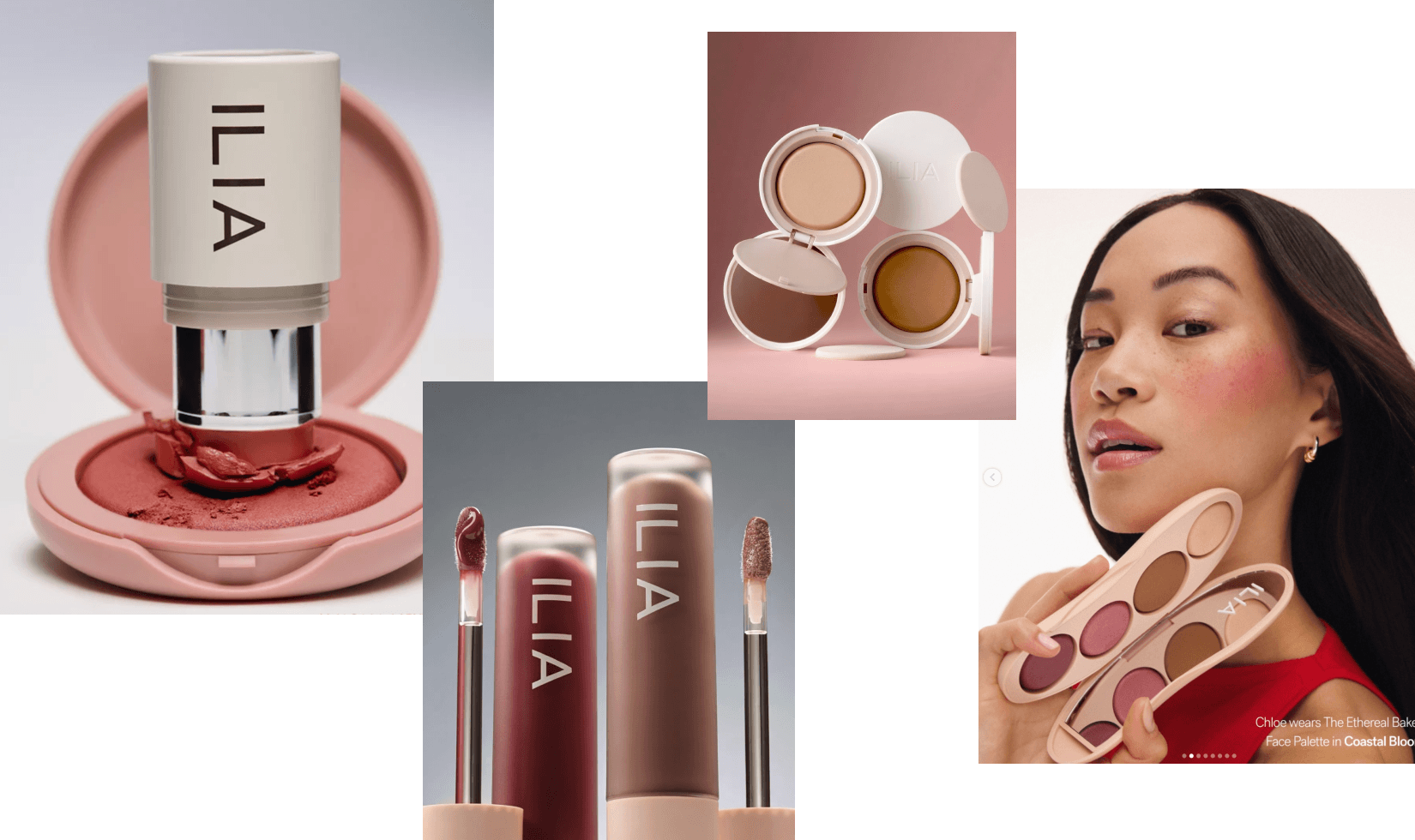
But the pipette did real strategic work. It made the hybrid instantly understandable on screen: drop, swatch, blend, reveal. Texture became communication.
And underneath all that serum theatre was a very old consumer problem. ILIA founder Sasha Plavsic has said she originally wanted an all-in-one product because, as a new mother with sensitive skin, she simply needed to get out the door faster. Twelve years after IOPE collapsed sunscreen and complexion into a compact, ILIA was selling essentially the same behavioural promise in a new visual language: fewer steps, less friction, more done in one product.
That might be the more useful definition of serumisation. Not makeup with skincare ingredients, but beauty products absorbing more jobs from the routine.
Typology: skincare started wearing make-up
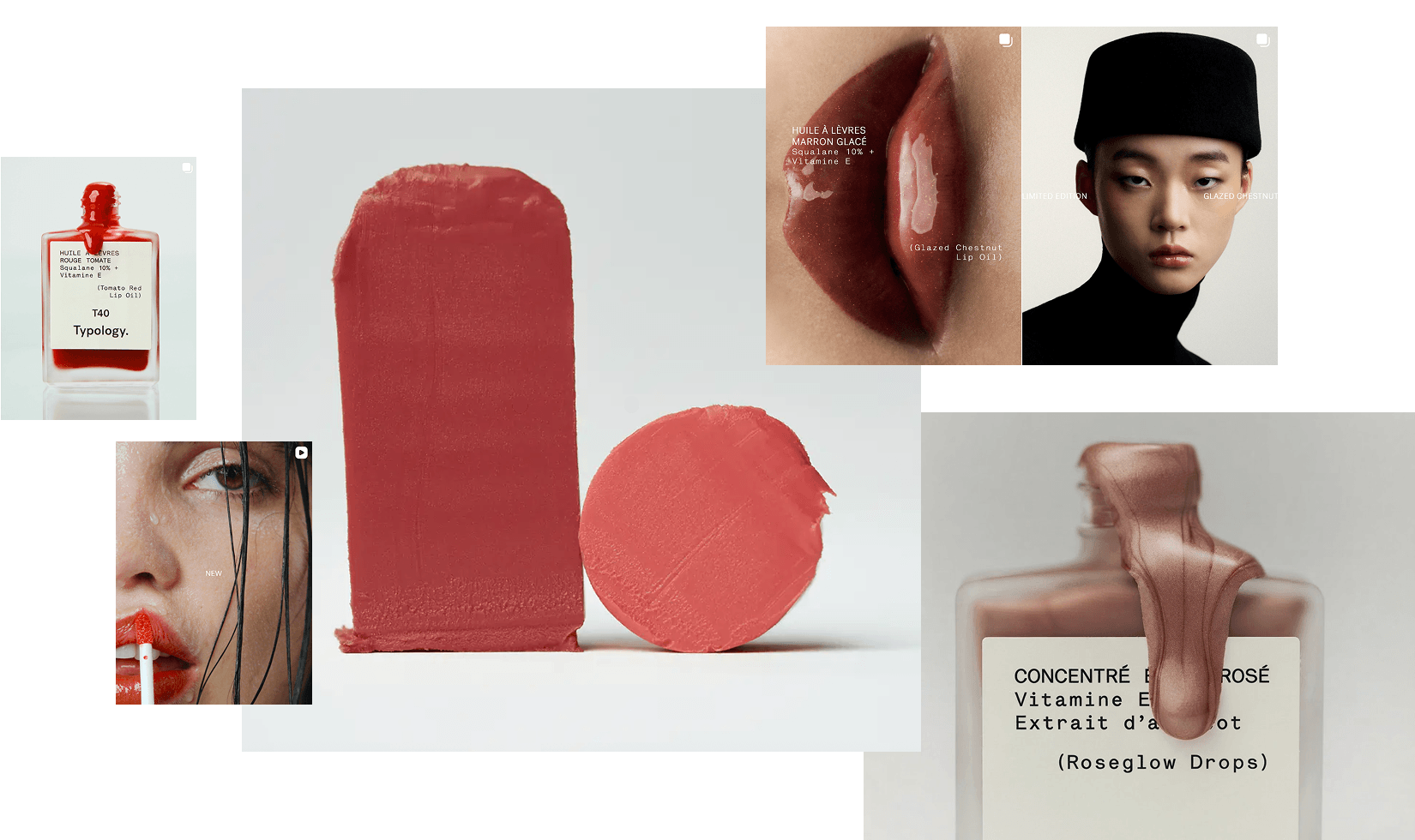
Typology makes the story stranger, because it crossed the border from the other direction.
ILIA taught make-up to behave like skincare. Typology taught skincare to wear pigment.
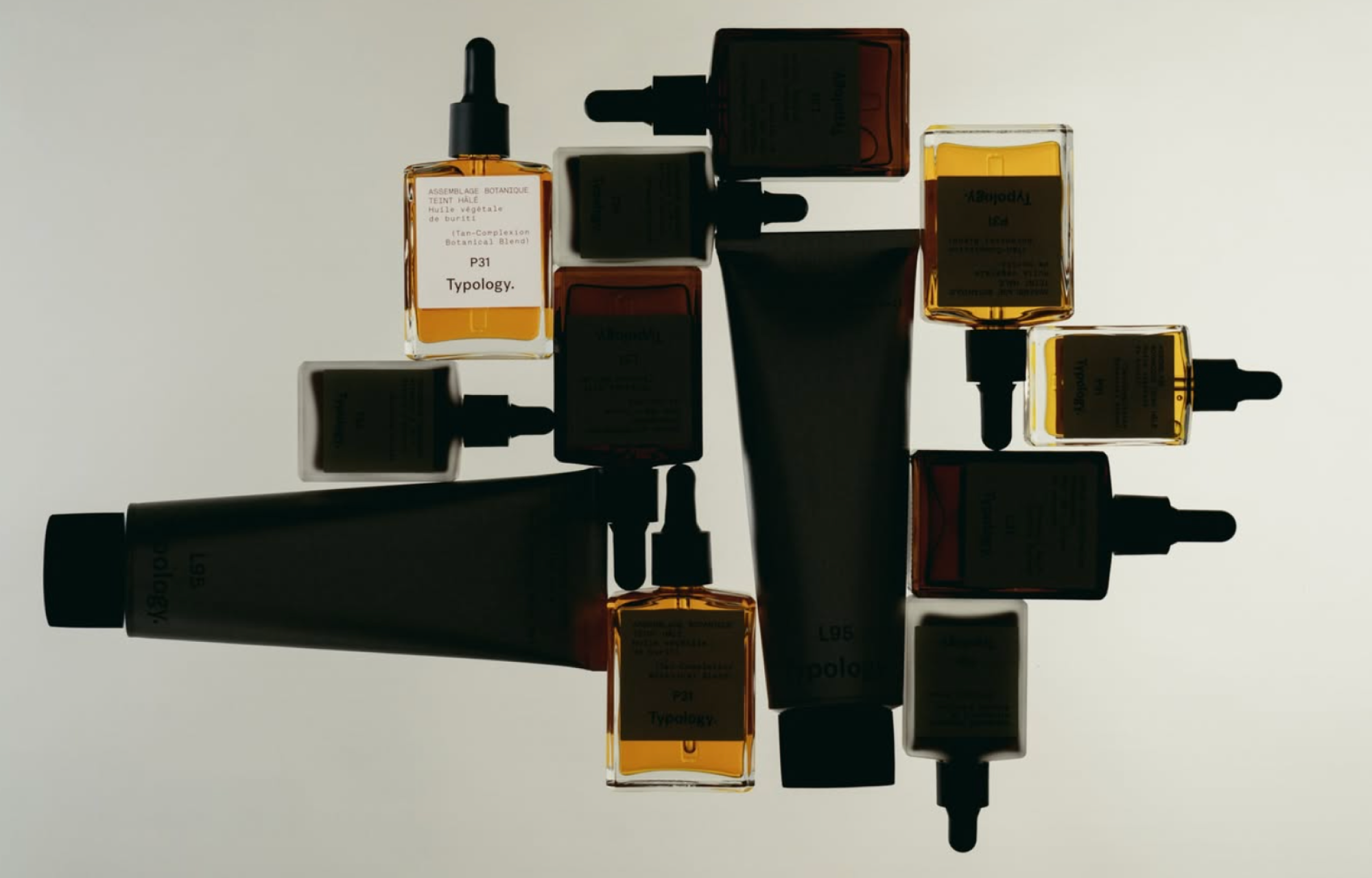
The French brand, created in 2019, was built around short formulas, ingredient transparency and a skincare system organised by concerns and actives. When colour arrived, Typology didn't suddenly create a conventional make-up universe. It placed it inside skincare as Soins Teintés — Tinted Care.
And Tinted Care has quietly become much bigger than a tinted serum. It now stretches across concealer, lip oil, bronzing concentrate, glow drops, redness corrector, brow products, mascara and even mattifying powder. The mascara is still called Sérum Mascara. The lip oil still leads with squalane. The concealer leads with caffeine. Colour has been absorbed into the skincare architecture rather than sitting beside it as a separate category.
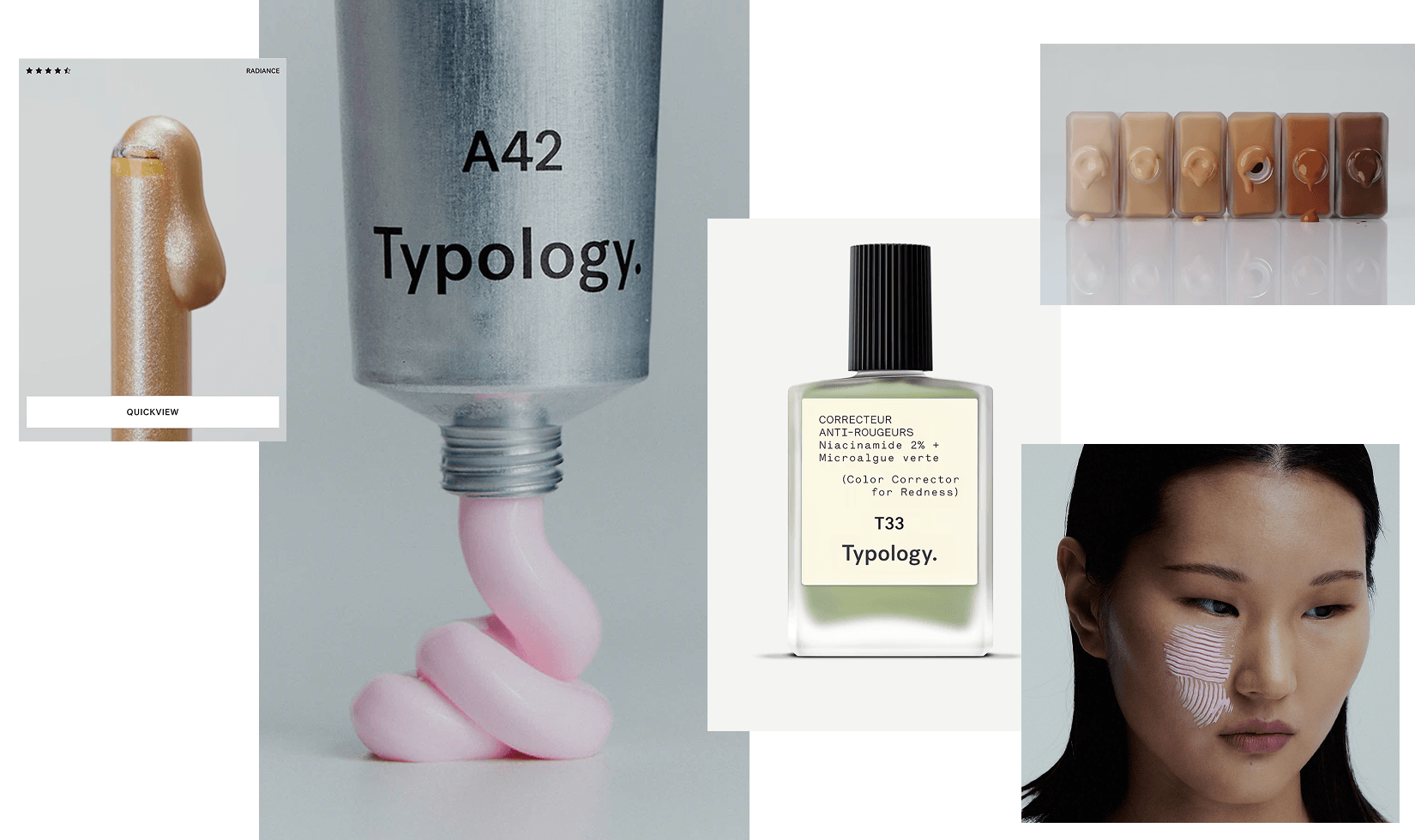
Even Typology's own definition gives the game away: its tinted care is designed to provide an immediate cosmetic effect while working on the skin over time. And its Tinted Serum now comes with a 28-day dermatologist-supervised use test. The category line hasn't merely blurred; the skincare side is starting to claim the whole thing.
This is why serumisation feels more useful to us than skinification. Skinification sounds like someone added a skincare ingredient to foundation. Serumisation describes something larger: make-up inheriting skincare's format, behaviour, language and standards. Your original dossier already identifies the same progression from format to finish to actives and, increasingly, proof.
Annadea: The formula works, the brand lives
There is, however, an obvious problem with everyone learning the same skincare language. Hyaluronic acid. Niacinamide. Peptides. Ceramides. Squalane. All useful. Increasingly incapable of giving a brand a personality.
Annadea started with a problem as serious as any in this category. Founder Olivia Adriance lived with cystic acne for more than a decade. The long-wear make-up she loved broke her out, and the “clean” alternatives quietly gave up by evening. Every morning came with a small negotiation: look good today, or keep your skin happy tomorrow. Pick one!
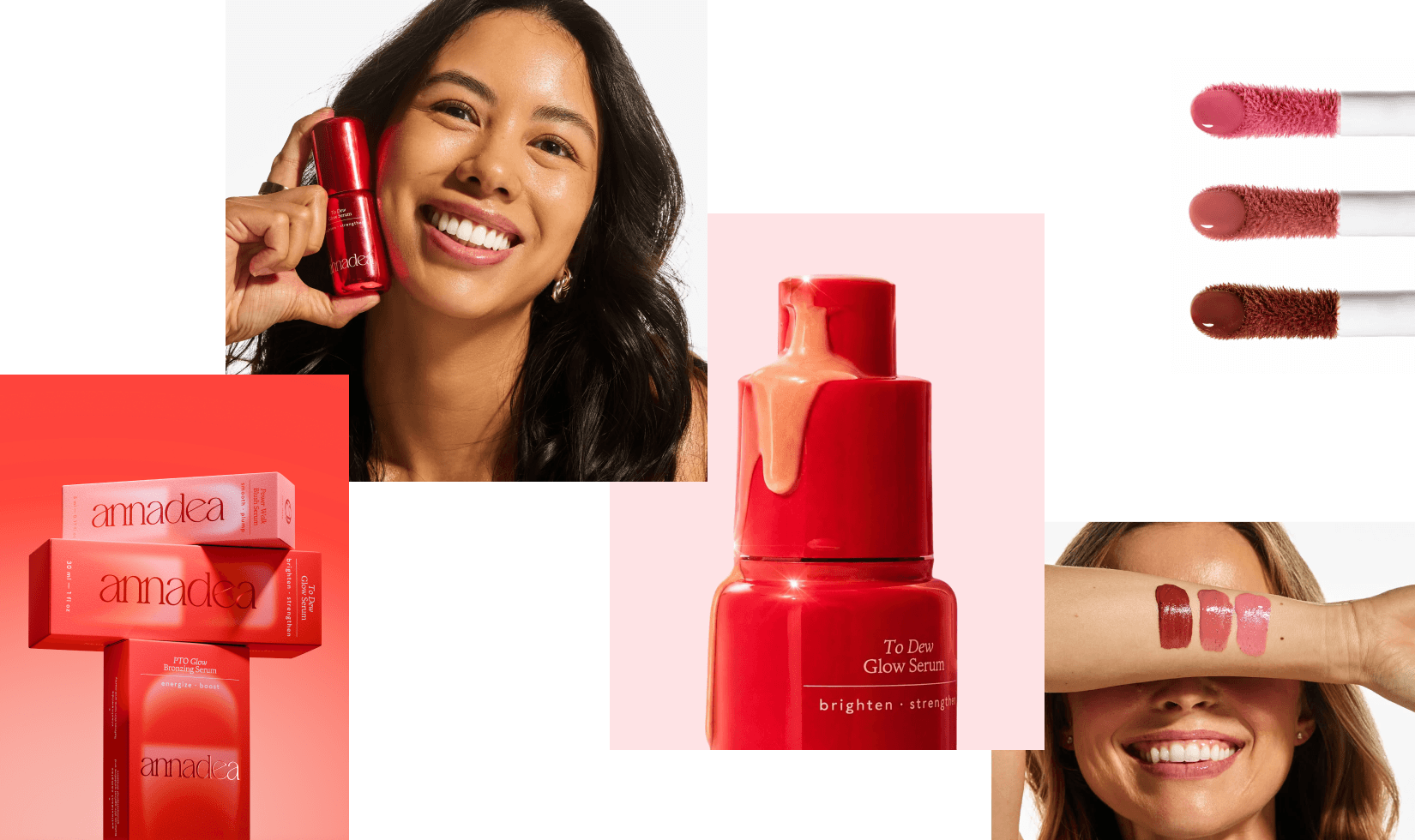
That story could easily have turned into an acne brand, all clinical white and stern little warnings. Instead, the names start from her day rather than her skin. Power Walk is a blush serum named after the flush you get from actually moving, in shades like Soft Step, Rose Trail and, for later plans, Late Date. PTO Glow is a weightless bronzing serum with niacinamide and an antioxidant complex, for that just-back-from-holiday colour without the holiday.
The skincare works quietly underneath, and the names talk about the woman wearing them. Full disclosure: we built the Annadea brand world with Olivia’s team, so yes, we’re a little biased. We still stand by the point.
The product carries the seriousness. The brand gets to have a life.
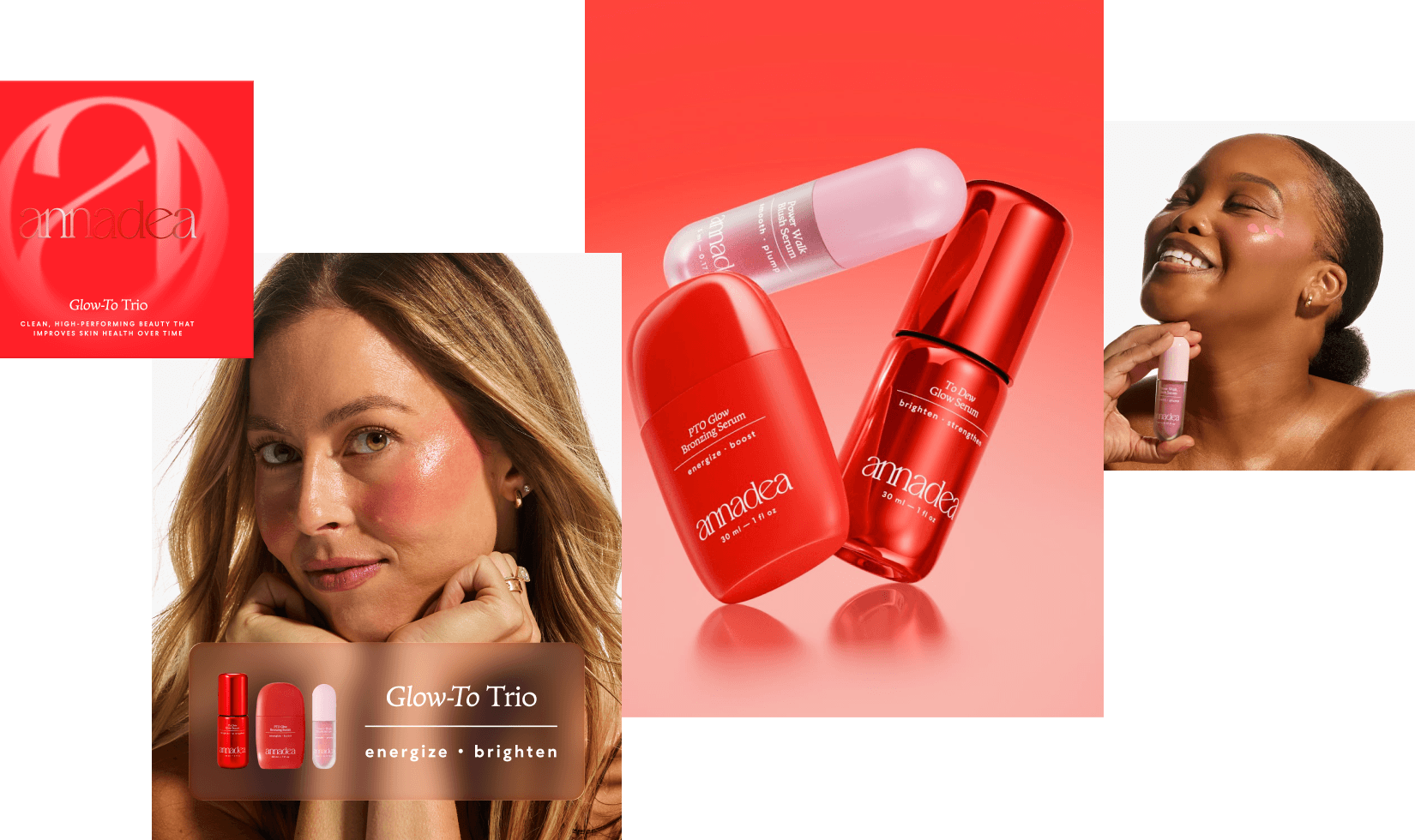
This feels especially relevant now because beauty is moving in two apparently opposite directions at once. Dazed Studio describes one side becoming more scientific, preventative, measurable and optimised, while the other moves towards character, play, self-expression and joy. Simply: optimise me, and let me be me. The important part is that they don’t see those impulses as mutually exclusive. We can want better skin and a bit of fun on our faces at the same time, ideally before the second coffee.
Serumised make-up lives right inside that contradiction. We want barrier support and an excellent red lip. Clinical proof and a bit of fantasy. And that may be where the category is heading. The more efficacy becomes expected, the less useful it becomes as personality.
How to use this intelligence:
Skincare in make-up is now the starting condition for any hybrid launch. What you build on top of it decides whether anyone remembers you.
- Start with the moment. What is your customer skipping, touching up or quietly putting up with? Build the product around that, then choose the actives that serve it.
- Let science earn trust. Decide what the product should genuinely do for skin, then test the finished formula against that outcome. Proof lives in the formula, the testing and the claims.
- Make the benefit visible fast. Texture, application and finish should explain the product in three seconds on a phone screen.
- Let the brand create memory. Naming, tone, casting, packaging and the world around the product are where competitors can’t follow you. Talk about the person’s day, and let the back label handle the chemistry.
- Check your shelf. Put your packaging next to five competitors. If you could swap bottles and nobody would notice, your identity is describing the category instead of you.
Competitors may be able to buy your niacinamide. They shouldn’t be able to buy your point of view.
October 8, 2026